Wickside
A transformative canal-side neighbourhood in Hackney Wick with homes, studios, and heritage-inspired spaces.
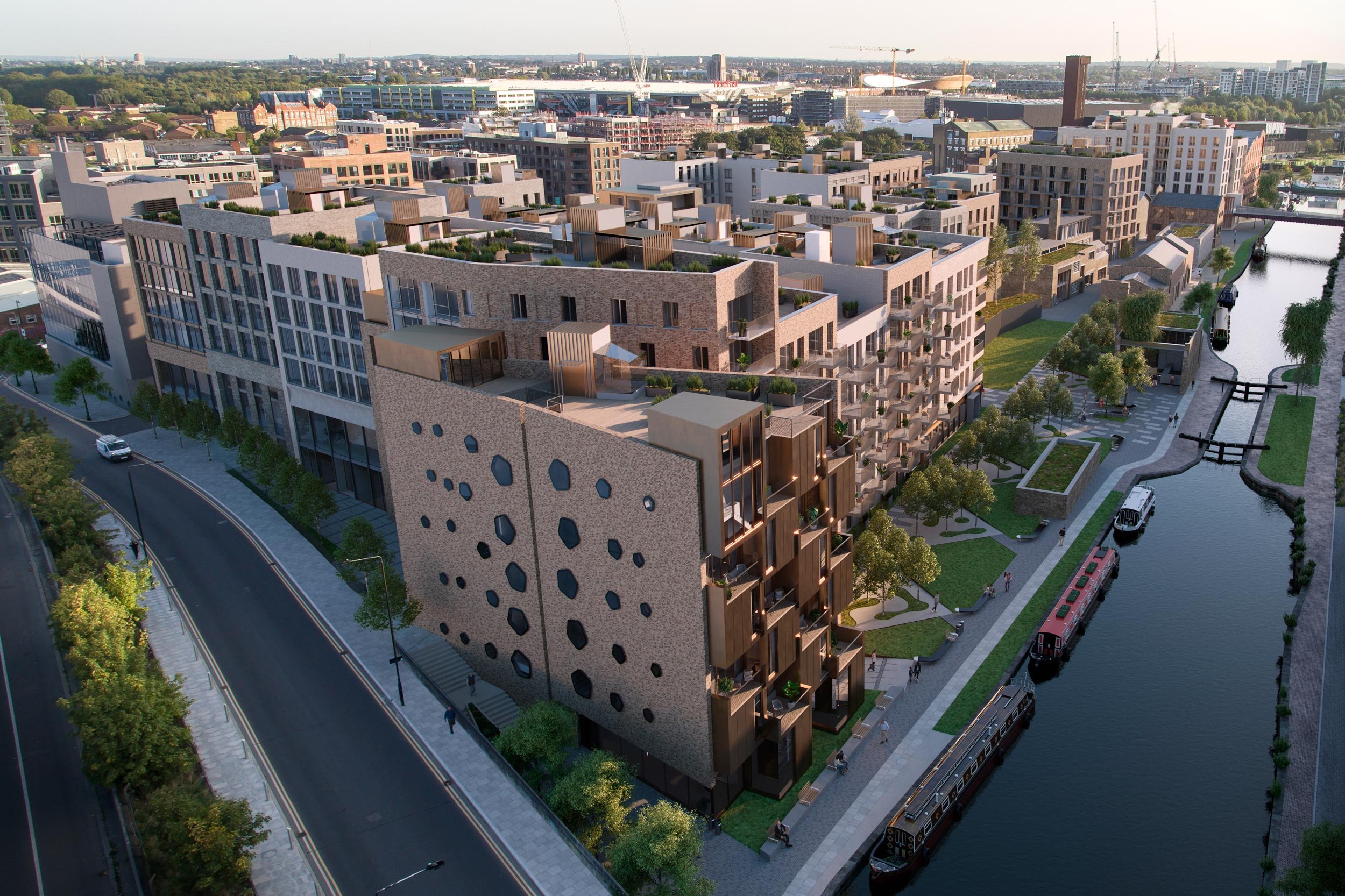
Wickside, formerly Magrath’s Yard, is a major canal-side development in Hackney Wick by Galliard Homes and the O’Shea Group. Spanning seven acres, it blends new-build structures with retained Victorian industrial buildings, delivering circa 500 homes, commercial spaces, and creative hubs. The scheme features 18 apartment blocks, five retrofitted masonry buildings, and a relocated pedestrian bridge to enhance canal connectivity.
| Location | Hackney Wick, London, E9 |
| Architects | ACA Studios Ash Sakula Architects BUJ Architects Studioshaw |
| Clients | Galliard Homes O’Shea Group |
| Sector | Residential Developments |
| Location | Hackney Wick, London, E9 |
| Architects | ACA Studios Ash Sakula Architects BUJ Architects Studioshaw |
| Clients | Galliard Homes O’Shea Group |
| Sector | Residential Developments |
A transformative canal-side neighbourhood in Hackney Wick with homes, studios, and heritage-inspired spaces.
Wickside, formerly Magrath’s Yard, is a major canal-side development in Hackney Wick by Galliard Homes and the O’Shea Group. Spanning seven acres, it blends new-build structures with retained Victorian industrial buildings, delivering circa 500 homes, commercial spaces, and creative hubs. The scheme features 18 apartment blocks, five retrofitted masonry buildings, and a relocated pedestrian bridge to enhance canal connectivity.


The site posed complex engineering challenges, including ground contamination remediation and constrained boundaries near key infrastructure including a Thames Water sewer, the Hertford Union Canal, and a major highway. The basement, spanning six buildings and a central courtyard, required a design minimising excavation and settlement risks. Tight urban conditions also demanded meticulous logistical planning for construction access and sequencing.
The site posed complex engineering challenges, including ground contamination remediation and constrained boundaries near key infrastructure including a Thames Water sewer, the Hertford Union Canal, and a major highway. The basement, spanning six buildings and a central courtyard, required a design minimising excavation and settlement risks. Tight urban conditions also demanded meticulous logistical planning for construction access and sequencing.
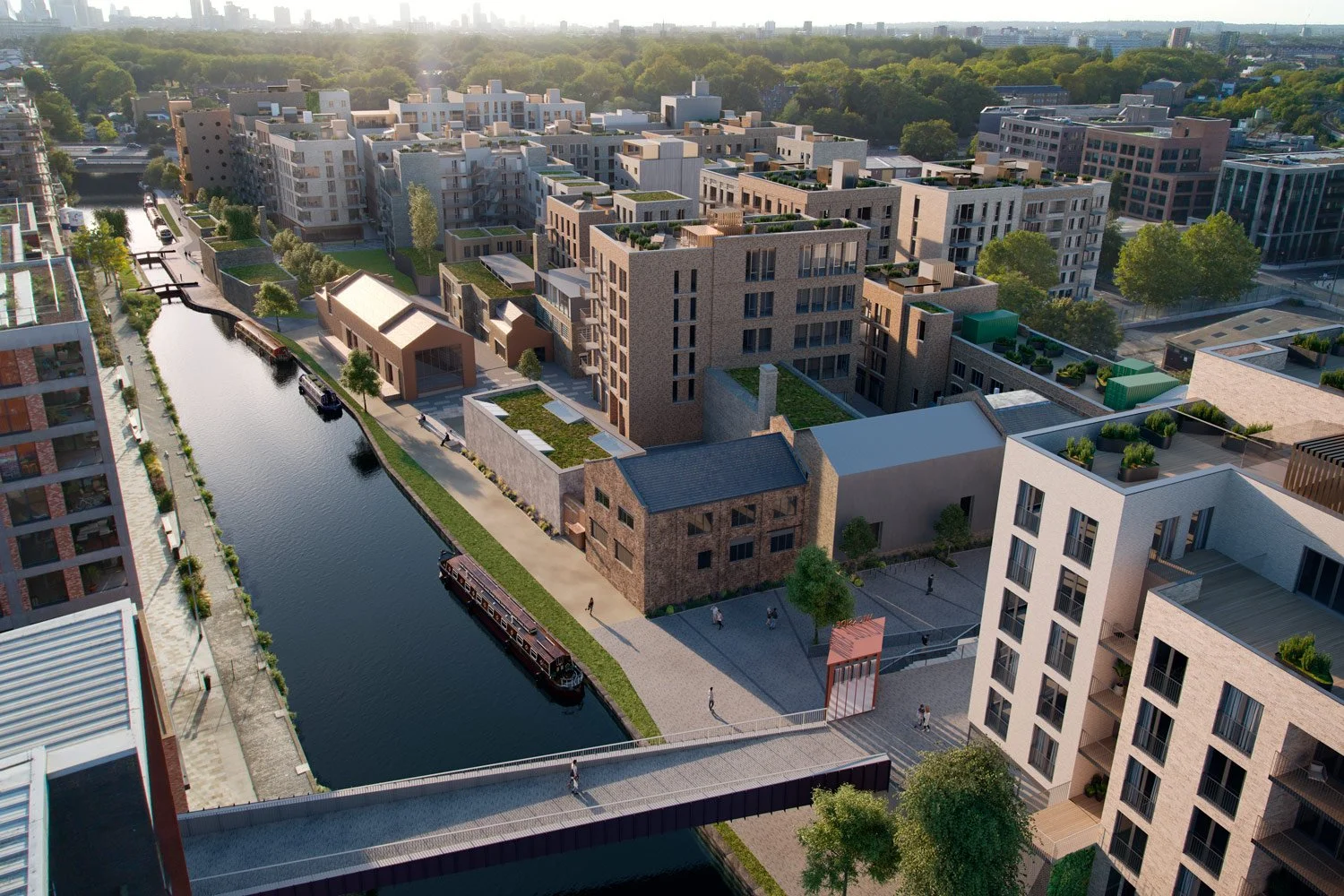

A key part of the project was the replacement pedestrian bridge across the canal, enhancing connectivity between Hackney Wick and Fish Island. We worked alongside Sutherland Hussey Harris bridge architects to develop a robust yet elegant structural solution that integrates seamlessly with the surrounding urban fabric.
A key part of the project was the replacement pedestrian bridge across the canal, enhancing connectivity between Hackney Wick and Fish Island. We worked alongside Sutherland Hussey Harris bridge architects to develop a robust yet elegant structural solution that integrates seamlessly with the surrounding urban fabric.


A settlement raft foundation was adopted for the basement, replacing a conventional slab and pile system, significantly reducing construction time and complexity. The new-build elements were designed with efficient reinforced concrete frames, providing robust structural performance while optimising material use. These frames were carefully detailed to facilitate rapid construction, allowing for streamlined sequencing on a constrained site.
A settlement raft foundation was adopted for the basement, replacing a conventional slab and pile system, significantly reducing construction time and complexity. The new-build elements were designed with efficient reinforced concrete frames, providing robust structural performance while optimising material use. These frames were carefully detailed to facilitate rapid construction, allowing for streamlined sequencing on a constrained site.


Form’s expertise in Victorian refurbishment engineering was utilised to accommodated the conversion and restoration of retained Victorian buildings, integrating new load paths while preserving their historic integrity.
Form’s expertise in Victorian refurbishment engineering was utilised to accommodated the conversion and restoration of retained Victorian buildings, integrating new load paths while preserving their historic integrity.
Awards & Nominations
2017
New London Architecture (NLA) Awards
Overall Winner
2015
MIPIM Future Projects Awards
Winner
Related Projects
-

Bagel Factory
Residential Developments
-

Orchard Wharf
Residential Developments
-

Weston Street
Residential Developments